

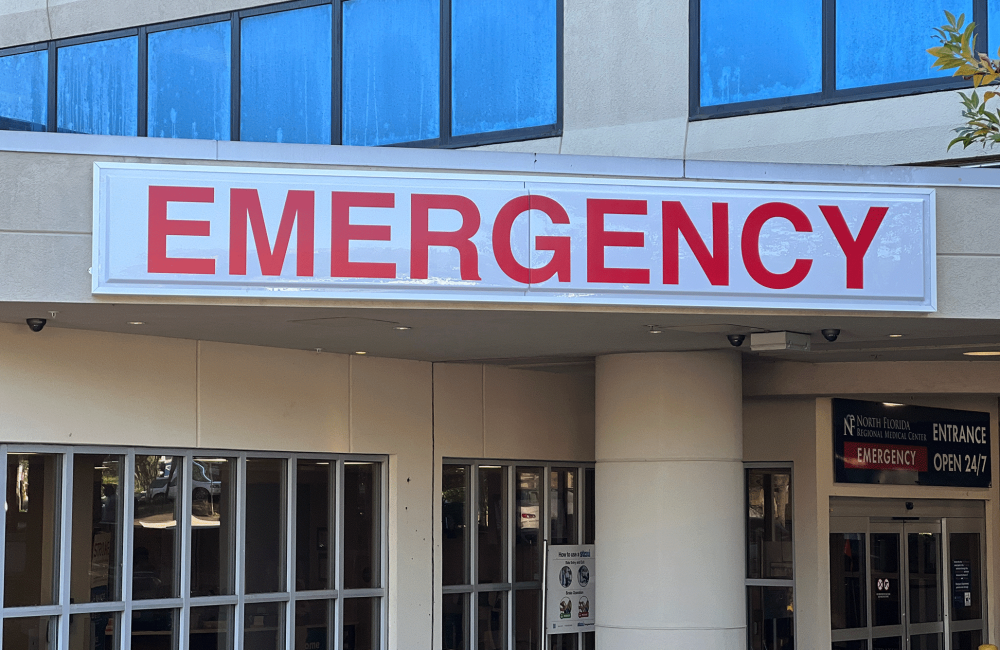
Emergency Services
Immediate, Expert Care When It Matters Most
When you face a life-threatening or sudden serious condition, every second counts. Richardson Medical Center’s Emergency Room is available 24 hours a day, 7 days a week, staffed by an expert team trained to provide fast, high-quality care in critical moments.
We treat medical emergencies of all kinds, from trauma and stroke to cardiac events, breathing crises, and sudden illness. Our goal is to stabilize you quickly, diagnose accurately, initiate treatment, and—when necessary—coordinate follow-up or transfer to specialized care.
Why Choose Richardson Medical Center’s Emergency Room
Rapid response, around the clock
Our ER is open 24/7, ready to serve you any hour, any day.
Experienced clinical team
Our physicians, nurse practitioners/physician assistants, nurses, paramedics, and support staff all specialize in emergency medicine.
Full diagnostic and imaging services
We offer on-site lab, X-ray, CT, MRI*, ultrasound*, and other imaging to support rapid evaluation.
*Not available in evenings or weekends.
Strong specialty support
When your situation requires specialized care, we coordinate and consult with cardiology, neurology, orthopedics, pediatrics, and more.
Seamless continuum of care
After your initial stabilization, if you require inpatient treatment or transfer, we manage that transition to ensure continuity and safety.
Commitment to quality and improvement
We continuously review outcomes, patient feedback, and operational processes to deliver better care and a more responsive experience.
When to Go to the Emergency Room vs. Urgent Care
It’s important to distinguish between true medical emergencies and less critical needs. Below are some signs that warrant going directly to the ER:
- Bleeding that won’t stop
- Chest pain or pressure
- Sudden confusion, dizziness or altered alertness
- Sudden weakness or numbness in face, arm, or leg (especially one side)
- Trouble speaking or understanding speech
- Difficulty breathing
- Sudden vision loss
- Sudden, severe abdominal pain
- Severe injury, burns, or head trauma
- Wounds from stabbings or gunshots
- Uncontrolled pain or symptoms that worsen rapidly
For non-life-threatening issues, Richardson Medical Center’s urgent care or your primary care provider may be appropriate.
What to Expect: Your ER Visit
When You Arrive
- You will be greeted promptly and triaged by a nurse, who will record your vital signs and ask about your reason for coming.
- Based on your condition’s severity, you may be taken directly into a treatment space or seen in a triage area until a room becomes available.
During Evaluation & Treatment
- Our medical team will order lab tests, imaging (X-ray, CT, MRI, etc.), EKGs, or other diagnostic assessments as needed.
- Treatment begins as soon as a suspected cause is identified (fluids, medications, stabilization, etc.).
Specialists may be consulted via teleconsultation (phone) to guide management and intervention.
Disposition / Next Steps
- If you are stable, you will be discharged with instructions, prescriptions, and follow-up care.
If further treatment or observation is needed, you may be admitted to the hospital.
In cases requiring a higher level of specialized care, we will coordinate transfer to another facility.
What You Should Bring & How to Prepare
To help expedite your care, please bring:
- Photo identification
- Emergency contact information
- A list of your current medications, doses, and allergies
- Any relevant medical records or prior imaging (when available)
- Insurance card (if applicable)
If possible, leave jewelry, large sums of cash, or other valuables at home.
Specialized Emergency Care Services
Richardson Medical Center is committed to providing comprehensive emergency services, including (if offered):
- Pediatric emergency care
- Stroke evaluation and rapid intervention
- Trauma stabilization
- Cardiac emergency care
- Teleconsultation with subspecialists when needed
Our network of specialists and referral pathways ensures that, even for complex cases, you receive the right care at the right time.
Frequently Asked Questions (FAQs)
Will I see a doctor right away?
We strive to begin assessment as quickly as possible. You may first see a triage nurse. If your condition is life-threatening, you will be taken to a treatment room immediately.
Will I wait long in the ER?
Waiting time depends on the severity and number of patients currently receiving care. Even if you do not immediately get a bed, evaluation, diagnostics, and initial care may begin in the triage area or via telemedicine.
Should I go to urgent care instead?
If your condition is not life-threatening, urgent care is a faster, lower-cost alternative. But for sudden, serious symptoms (e.g. chest pain, difficulty breathing, severe bleeding, stroke symptoms), come directly to the ER.